
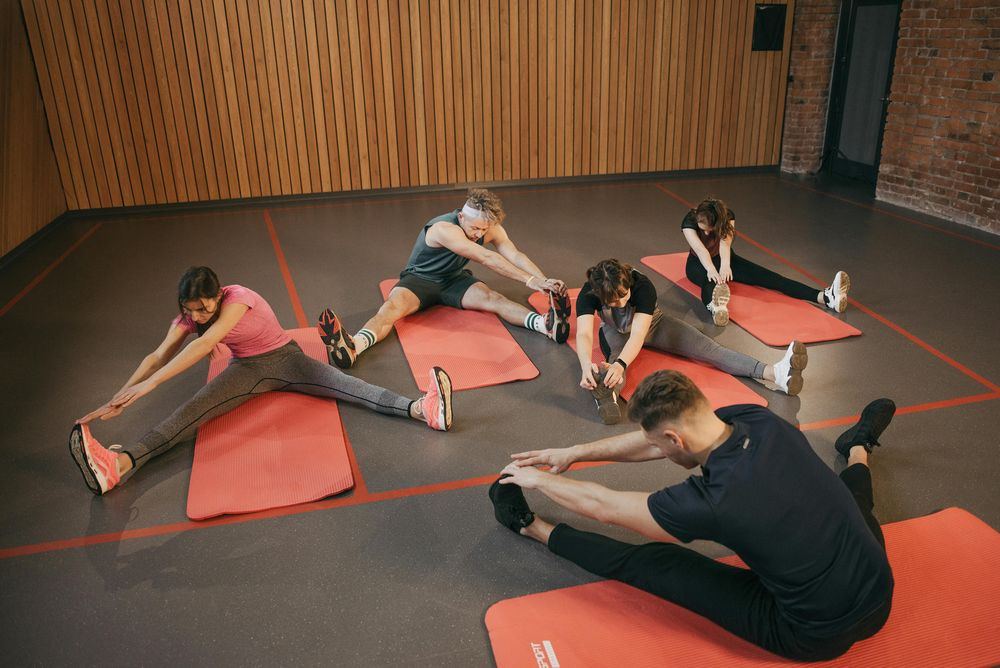
Group coaching online: one-on-one vs group compared
Group coaching lets you train several clients at once, which raises your hourly revenue and creates a momentum that one-on-one cannot. The trade-off is less personalization, so it works best for clients who share a goal and can handle a bit more autonomy. It is a real lever for scaling, but it is not right for every client or every objective. This article compares group coaching with one-on-one honestly, shows who it suits and who it does not, and walks through how to launch a group program that actually works.
One-on-one vs group coaching
The two models are not better or worse, they are different tools. One-on-one gives each client your full attention and a fully tailored plan. Group coaching trades some of that depth for reach, affordability, and the energy of training alongside others. The right choice depends on the client and the goal, not on which model sounds more premium.
| One-on-one | Group coaching | |
|---|---|---|
| Personalization | High, fully tailored | Lower, built around a shared plan |
| Revenue per hour | Limited by your time | Higher, several clients at once |
| Workload | Scales with client count | More upfront, lighter per client |
| Client experience | Private, individual | Community, shared momentum |
| Best suited to | Specific needs, beginners who need guidance | Shared goals, fairly autonomous clients |
The benefits of group coaching
The clearest benefit is revenue per hour. Coaching eight people in a session that takes the same time as one private call changes the math of your business, which is why group coaching is one of the main ways coaches break past the ceiling of selling their hours one at a time.
Beyond the money, the group itself does work that you cannot do alone. People train harder when others are watching and showing up, and accountability rises when a client knows the group will notice their absence. A group also makes coaching affordable to people who could never pay for one-on-one, widening who you can help. And over time, a good group becomes a community that keeps members around for the people as much as the program. If your aim is to grow without simply working more hours, this is one of the cleanest levers you have.
The limits, and who it does not suit
Group coaching is not a universal upgrade, and pretending otherwise leads to unhappy clients.
The obvious cost is personalization. In a group, the plan is built around what most members need, not around one person's exact situation. That is fine for shared goals and a problem for anyone with specific needs, an injury, a particular sport, a very different starting point. Mixed levels make this harder: a session that suits the middle of the group can bore the advanced members and overwhelm the beginners. And some clients simply need individual attention to stay on track, whether because they are new and unsure or because they want privacy. Pushing those clients into a group to save your time usually costs you the client.
How to launch group coaching
Once you know it fits, launching well comes down to a few decisions made on purpose rather than improvised.
Choose a format
Group coaching is not one thing. You might run a shared program everyone follows at their own pace, a cohort that starts and finishes together over a set number of weeks, or an ongoing membership people join and leave at any time. A fixed cohort builds strong accountability and is easier to coach. An open membership scales more smoothly but asks more of your systems. Pick the one that matches the goal and the commitment you can sustain.
Define the common goal and the right client
A group works when its members want roughly the same thing. Define one clear shared goal, fat loss, a first race, general strength, and recruit clients who fit it. The more aligned the group, the easier it is to coach and the better the results. This is also where you decide who the group is not for, so you can steer those people toward one-on-one instead.
Structure the follow-up and communication
A group still needs a system. Decide how you deliver the program, how members check in, where the group talks, and what minimum individual touch each person gets. A shared space for questions and a regular group check-in keep people engaged, while dedicated coaching software lets you assign the program and track everyone without rebuilding it for each member. The goal is for no one to feel invisible inside the group.
Set the price and the group size
Group coaching is priced below one-on-one, which is part of its appeal, but it should still reflect the value and the results it delivers. Decide your group size deliberately: small enough that members still feel seen, large enough that the economics work. There is no single right number, it depends on the format and how hands-on you intend to be.
Before you launch, a quick checklist:
Is there one clear shared goal the group is built around?
Do you know exactly who this group is not for?
How will members get the program, check in, and ask questions?
What is the minimum individual attention each person receives?
Is the price and group size set so both the clients and you come out ahead?
Combining group and one-on-one
You do not have to choose one model forever. Many coaches run both, and the two feed each other. A group can be an affordable entry point that introduces people to your coaching, with one-on-one as a premium step up for those who want more. One-on-one clients can graduate into a group once they are autonomous, freeing your time while keeping them in your world. Offered together, the two models cover a wider range of budgets and needs than either does alone.
Common mistakes to avoid
A few errors sink group programs before they get going.
Building a group that is too mixed, so no single session serves anyone well. Letting it grow too large, until members feel like a number. Running it with no real structure, so engagement fades after the first weeks. Cutting individual contact to zero, when even a small personal touch is what keeps people from drifting. And pricing it wrong, either so low it is not worth your time or so high it loses the accessibility that makes group coaching attractive in the first place.
Start with a small pilot
Group coaching scales your time, but it asks for a different kind of organization than one-on-one. It is not simply one-on-one with more people in the room, it is a format with its own design, economics, and failure modes.
The low-risk way in is a small pilot. Take one clear shared goal, recruit a handful of well-matched clients, and run a short cohort to learn how you coach a group before you build anything bigger. You will find out fast what works for you, refine the format, and grow from something that already runs rather than from a guess.